Carry On Laughing

Cat Googe
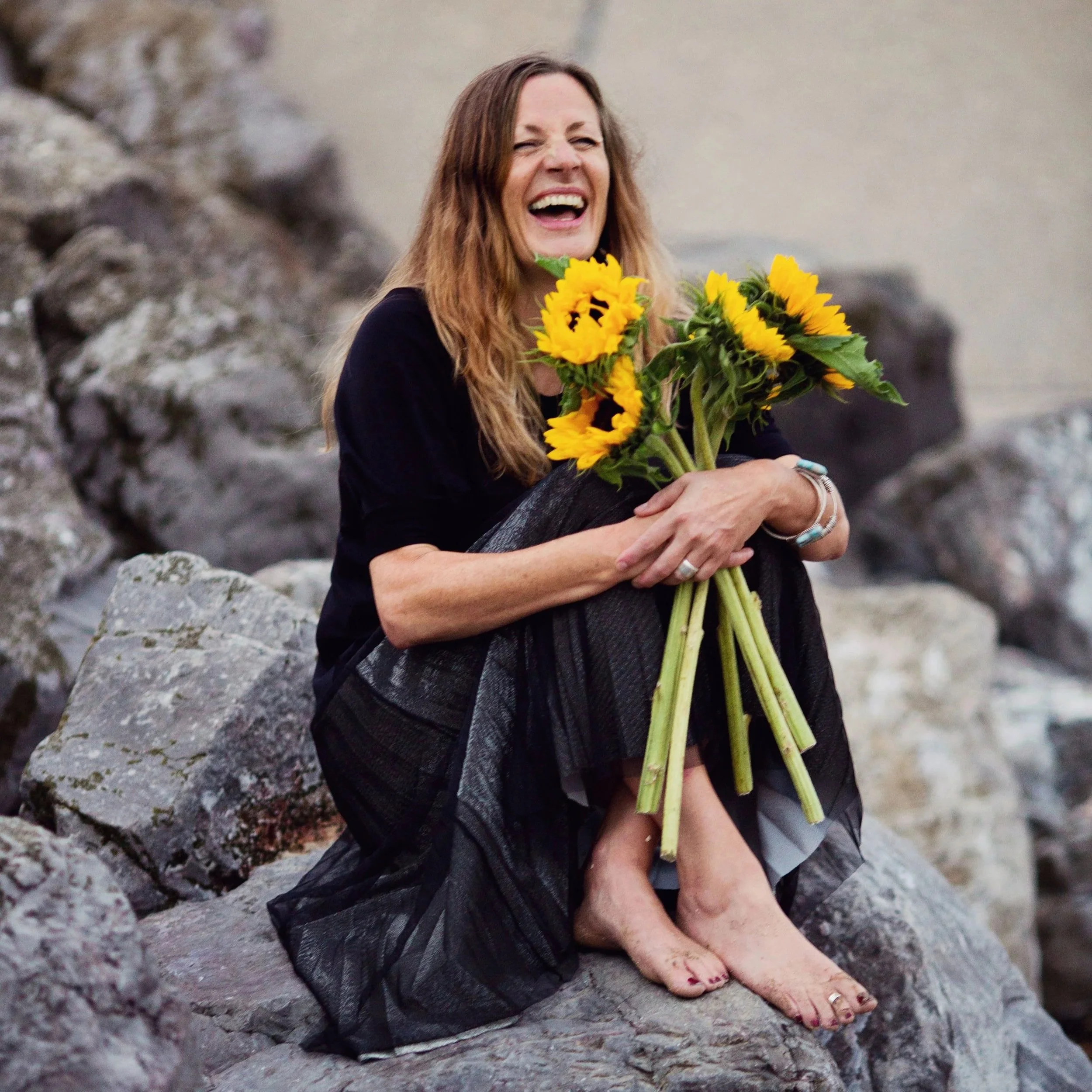
January can often be one of the bluest months of the year when many people feel sad and lack a zest for life. It’s generally a time when laughter and joy seem like elusive goals. But Cat Googe, the self-proclaimed Joy Queen, is on a bold mission to spread joy wherever she goes.
We’ve been told laughter is the best medicine, but can we really train our minds to laugh intentionally - and basically fake it until you make it? Sue Pritchard joined in with the laughter to find out more.
Cat Googe is the self-proclaimed Joy Queen and on a bold mission to spread joy wherever she goes. We first met at Fearne Cotton’s aptly named Happy Place Festival one summer. As raucous laughter echoed around Chiswick Park, I stood there somewhat awkwardly, feeling very British during my initial introduction to laughter yoga.
I hadn’t known what to expect during my first session but the first thing I did learn is that laughter yoga doesn’t involve any specific yoga poses at all. However, as Cat explains, the yoga part focuses upon the importance of breathwork.
“Laughter is high vibrational energy and having deep belly breath for grounding is key,” Cat said. “This type of yoga is a mixture of laughter, high energy, high vibration, and deep belly breath connection, all of which bring us back to feeling fully grounded.”
Cat has practised traditional yoga on and off for many years, but this former primary school teacher only discovered laughter yoga about six years ago. She became curious when taking part in a wellness day, experiencing an epiphany moment during her first taste of this type of practice.
“I’d always been a glass half-full, high vibrational energy type of person anyhow,” she says, “but I fell in love with laughter yoga straight away. I thought wow, this is the thing I’ve been looking for. It was so deeply cathartic. I felt with every bone in my body this is what I needed to do.”
Buzzing from the wellness day, Cat immediately signed up to do training and believed laughter yoga could lead to the next chapter in her life.
“As I approached my 50th year I knew if I stayed in teaching, I’d be sitting in the staffroom waiting for retirement. It was daunting thinking about being self-employed versus the security of employment, but I took that leap. I believed laughter yoga could open up a new pathway towards other things I can do. It created a seismic shift in my world,” she said.
Three years ago, Cat started up her own business of sharing laughter yoga and reiki. Indeed reiki was also a recent discovery for her and she’d only experienced it for the first time a year earlier when grieving after her dad died.
“I had such a beautiful experience connecting with him,” Cat recalls. “They say reiki finds you and I think it found me in this wonderful moment. It helped put me on the path as a practitioner. I love laughter yoga and reiki in equal measure and can’t imagine doing one without the other. There’s synergy between them. Reiki brings magic like the sprinkles on top of a delicious ice cream.”
What Is Laughter Yoga?
Laughter yoga is described as a non-bendy, non-intrusive, and all-inclusive fun workout. Combining the deep breathing techniques of yoga with playful laughter exercises, it began with a handful of participants in a Mumbai park in 1995. Now however, there are reportedly thousands of people taking part in over 100 countries worldwide.
Training our mind and body to laugh intentionally with regular practice means we don’t need a sense of humour, joke or comedic reason to laugh. There are also many benefits to laughing which probably explains why we use the phrase: laughter is the best medicine. Studies show even when we pretend to laugh, we can still reap its positive physiological and psychological effects. Laughter can lift our mood instantly and reduce fear and anxiety, regulate breathing, help with insomnia, grief, and anger management. It can even aid digestion and provide a cardio workout too.
Those who’ve taken part in laughter yoga say it helps shift imposter syndrome, bringing ease, flow, and confidence to their abilities. It also fosters self-love and compassion, welcoming in more joy and good vibes, enabling participants to get out of their heads and become more present within their own bodies.
“A lot of people feel disconnected from who they really are,” Cat adds. “We’re often seeking validation and answers from elsewhere and have lost trust in ourselves. That’s why I do what I do as laughter yoga can help us feel more connected.”
Cat urges people to simply come to laughter yoga as they are. Her sessions involve breathing exercises and moving your body to music in any way you choose. There are no specific dance moves, and you can shake, jump around or merely move your shoulders. There’s no expectation. You simply do what’s good for you and your body. And, of course, there’s laughing too.
Comparing laughter yoga to a journey that enables you to release physical and mental niggles, Cat says she always ends her sessions with reiki healing. With a lot of energy moving and shifting around the body, she believes reiki “wraps it all up in a little bow”. It’s a final clearing and helps to welcome in what we desire, she adds.
Faking It
As well as taking part in a laughter yoga session with Cat at the Happy Place Festival, I’ve also done a couple of sessions on Zoom. If I’m honest though, I felt more at ease in the comfort of my own home, hiding behind a computer screen.
“You need to try and put any awkwardness aside,” Cat told participants at the beginning of an online session. “We’re all human and that’s okay. Just trust you’re in a safe place with beautiful souls who are heart-led and heart-centred, holding one another in love.”
Taking several deep breaths in, breathing in joy and releasing anything that no longer served me, I got ready to laugh with my fellow yogis under Cat’s guidance. And yes, I did feel silly and somewhat awkward. This failed to ease when we were invited to clap and channel our inner Santa Claus by ho-ho-ho-ing into the screen, heading towards a grand crescendo of raucous laughter.
However, as they say, sometimes in life you have to fake it until you can make it. Continuing to dance around my lounge at home, it took me back to being eight years old again. I used to love dancing to music after school, shaking off all my troubles without a care in the world and not worrying if anyone else saw me.
Back to being in my 50s with my home disco gaining momentum under Cat’s prompting, guided by the rather cheesy and infectious dance music she’d chosen, it felt as if I was having a good workout. As the endorphins started pulsating around my body, I couldn’t resist joining in with the laughing faces dotted across my screen.
It felt like one of those situations when, even if you don’t understand a joke, merely looking at someone else who finds it hilarious makes that laughter contagious. Before long I was genuinely laughing and wondering when I’d last laughed like this, and how often do I tend to laugh throughout the day? In fact, why is it we laugh less when we become adults?
Some studies claim that in comparison with the average four-year-old who laughs about 300 times a day, 40-year-old adults only laugh about four times. Although these numbers are debatable, it’s generally accepted that children do laugh way more than adults.
The whole energy of laughter yoga, Cat says, is to invite play and fun and not get caught up in adulting. Practising laughter is a good way to do it, and she gives the unusual analogy of toilet roll to explain why adults no longer prioritise joy.
“We’ve got confused as we look at joy as a luxury item on our shopping list, but it should be more of an essential one such as toilet roll,” Cat laughs, something she often does when speaking. “And look what happened when we ran out of toilet roll during Covid. It was carnage. We need to remind ourselves that joy is an everyday essential like our trusty toilet rolls we can’t live without.”
All the feelings
Admitting she’s not always “rainbows and unicorns”, and that we do need to “feel all the feelings”, I was intrigued to know if Cat is saddened because adults need reminding about the wonderful joy of laughter.
“Yes, it is sad,” she replied. “Life can be busy, and a lot of people have a lot of life going on for them. We can’t take away the sad and awful things that happen across the globe or that happen to us personally but,” she adds, “we can choose how we respond to them. We can choose to look at life as the gift it is and live it the way we want.”
Cat says she is very much grounded in gratitude and thankful for her journey in life so far.
“I choose to have this beautiful relationship I’m developing with joy,” she says. “We need to allow ourselves to dance with joy even though we can still feel pain and sadness. We’ve got to believe we can navigate joy and sadness at the same time. It doesn’t have to be one or the other.”
Cat’s words reminded me of a couple of my favourite quotes. One of them says life doesn’t have to be perfect to be wonderful, while the other declares although life can be a shipwreck, we mustn’t forget to sing in the lifeboats. And yes, it is sad we often forget to tap into the laughter and joy in our lives, but after speaking to Cat, I’ve realised more people like her are stepping up. They’re helping us find ways to come back to ourselves through laughter and joy – even if only in small doses, now and again.
“I love what I do,” Cat says, her voice brimming with enthusiasm.
When asked what the best thing about her job is, Cat replied it’s seeing people experience laughter yoga for the first time. And for her, nothing beats witnessing this at some of the “big live energy” events she’s taught at, such as the Happy Place and Glastonbury Festivals amongst many others. Describing the visible shifts you can witness through laughter yoga, Cat says a person’s whole physiology transforms. Their body relaxes, their faces change, and their eyes light up.
“At the Mind Body and Spirit show in Birmingham last November, an older lady came up to speak to me at the end,” Cat says. “She told me she’d forgotten how to laugh but after my laughter yoga session, said she was never going to forget me. I didn’t know her story but for whatever reason this lady had lost her laughter along the way. It brought me so much joy because she chose to come along to the session and join in. And this is why I do what I do.
“I’m simply reminding people to invite joy back into their lives,” Cat concluded. “We’re often tricked into thinking joy is all about the big things in life, but it really isn’t.”
Laughing Out Loud
My experience of laughter yoga and Cat’s words have left a lasting impression. They’ve made me more determined to seek out laughter on a daily basis, and I even resorted to laughing in the face of adversity when life became a little rockier recently. In fact, I’ve not only been singing in the lifeboats, I’ve been laughing out loud too.
You can find Cat Googe on Facebook and Instagram, with more details at https://catgooge.com